
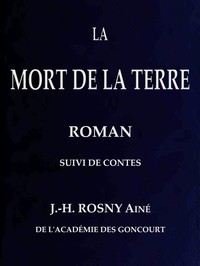
La Mort de la Terre, roman, suivi de contes by aîné J.-H. Rosny
Published in 1910, La Mort de la Terre (The Death of the Earth) is a stunning piece of early science fiction that feels eerily modern. It’s the main novel in this collection, followed by several shorter 'contes' or tales.
The Story
Imagine Earth, billions of years from now. The oceans are gone. The rivers are bone-dry canyons. Humanity, now called the Ferromagnetics, has been whittled down to a tiny, desperate group living around the last few pockets of water. Their society is rigid, focused solely on survival and strict water rationing. The story follows Targ, a man who witnesses the unthinkable: the emergence of a new form of life, the Ferrous. These are silicate, metallic creatures that thrive in the arid hellscape that kills humans. As the last water sources fail and the Ferrous multiply, Targ and his people face the final, inevitable collapse of their species. The plot is a tense, quiet march toward an ending that feels less like a defeat and more like a profound, cosmic changing of the guard.
Why You Should Read It
What blew me away wasn't the action—there’s very little—but the mood. Rosny builds a world of crushing despair and stark beauty. You feel the dryness in your throat. The genius is that the enemy isn’t evil; it’s just different. The Ferrous aren’t invaders; they’re the rightful heirs to a world we ruined. The book becomes a deep meditation on extinction, legacy, and our place in the universe. It asks if humanity’s greatest act could be to step aside gracefully. Targ’s journey is less about fighting and more about understanding and accepting this vast, impersonal transition. It’s philosophical sci-fi at its purest.
Final Verdict
This is a must-read for fans of thoughtful, melancholic science fiction like the works of Olaf Stapledon or the quieter episodes of The Twilight Zone. It’s perfect for anyone who loves big ideas about ecology, evolution, and humanity’s destiny. If you prefer fast-paced stories with clear heroes and villains, this might feel slow. But if you want to be transported to a truly unique, haunting end of the world and sit with some heavy, beautiful questions, Rosny’s vision is unforgettable. The accompanying short stories are a great bonus, showcasing more of his inventive and often bleak imagination.
The copyright for this book has expired, making it public property. It serves as a testament to our shared literary heritage.
Robert Ramirez
4 months agoJust what I was looking for.
Michelle Wilson
1 year agoEnjoyed every page.