1

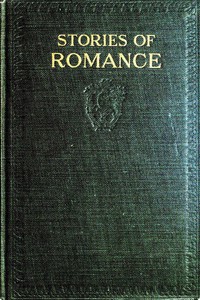
Stories of Romance — Background and Themes
(0 User reviews)
1892
Project Gutenberg
2020
Not confirmed
Fiction; Short stories; Literature -- Collections
Readers of public-domain and historical texts
Project Gutenberg digital edition
en
Edition facts
Words
68,194
Reading time
297 min
Text sections
7
Before opening Stories of Romance — Background and Themes, the edition data offers a quick orientation: 68,194 words, 4 hr 57 min estimated reading time, and 7 detected text sections.
The text analysis averages about 23.6 words per sentence, while the detected sections provide another way to judge how the source is divided.
Project Gutenberg metadata also associates the work with “Fiction,” connecting these edition facts with the source record’s subject description.
Source:
Project Gutenberg record #61422
This 1875 collection of five romance stories by Oliver Wendell Holmes, Dinah Mulock Craik, Harriet Prescott Spofford, John Wilson, and Allan Cunningham showcases varied narrative voices and settings, from a boarding-house table to a Cornish coast, with emotional intensity and regional detail.
Editorial Edition Score
4.7/5
★★★★★
★★★★★
Calculated from edition completeness, EPUB availability, text structure and catalogue metadata. Not a user rating.
How this score is calculated
- Description quality20 pts
- Title & short description10 pts
- Source metadata20 pts
- Text length15 pts
- Chapters / structure15 pts
- EPUB file integrity20 pts
Total of 100 points, scaled to a 2.5-5.0 range. Editions with an empty description or a missing EPUB file are not scored.
Edition quality
Read the complete public-domain text at its original source.
Read on Project GutenbergRossiter Johnson's 1875 anthology Stories of Romance brings together five works that share a catalog subject—romance—but diverge sharply in voice, setting, and narrative strategy. The opening story, Oliver Wendell Holmes's 'Iris,' is narrated by the Professor from The Professor at the Breakfast-Table, a loquacious observer who dissects a young woman's appearance with clinical precision: 'Tawny-haired, amber-eyed, full-throated, skin as white as a blanched almond.' His commentary blends social comedy with a self-aware, almost novelistic framing. In contrast, Dinah Mulock Craik's 'The Rosicrucian' employs a first-person female narrator whose speech is colloquial and immediate, as when she describes a moment of mutual recognition: 'it was just as if the angel of the Lord had shaken his wings over us in passing.' The collection thus juxtaposes detached wit with visceral emotional disclosure.
Narrative Framing and Observational Voice
Holmes's 'Iris' opens with a narrator who explicitly forecasts the plot: 'anybody can see that our young Marylander will be dead in love with her in a week.' This self-conscious narration treats the unfolding romance as a predictable social performance, complete with a hypothetical wealthy benefactor. The Professor's voice is urbane, ironic, and fond of analogies—comparing the State House to 'the Parthenon of our Acropolis.' He watches the Little Gentleman's silence and interprets it as a sign of inner turmoil, yet his own commentary remains playful. This framing distances the reader from raw emotion, presenting romance as a spectacle to be analyzed rather than felt.
Colloquial Intimacy in Craik's Prose
In 'The Rosicrucian,' the narrator's language is markedly different: she uses contractions, dialectal phrasing ('I declare to man 't would have touched a heart of stone'), and domestic details like 'mother turned on her pillow with a little moan.' The story unfolds through dialogue and internal reflection, not detached observation. When Dan Devereux admits he does not love Faith, the narrator records his hesitation and the subsequent silent revelation between them. The prose relies on sensory and emotional immediacy—'the blood stood still in my heart'—rather than analytical commentary. This contrast between Holmes's polished frame and Craik's raw, breathless style defines the collection's range.
Setting and Regional Texture
The excerpts offer only glimpses of the other three stories, but the table of contents lists Harriet Prescott Spofford's 'The South Breaker,' John Wilson's 'The Snow-Storm,' and Allan Cunningham's 'The King of the Peak.' These titles suggest a movement from interior spaces (Holmes's boarding-house, Craik's kitchen) to coastal and mountainous landscapes. Spofford's story, set on a 'South Breaker,' likely involves the sea; Wilson's 'The Snow-Storm' implies a harsh winter setting; Cunningham's 'The King of the Peak' points to a Derbyshire hill-country tale. The collection thus spans urban, domestic, and wild geographies, each story embedding romance within a distinct regional atmosphere.
Readers approaching this volume should expect not a unified genre but a demonstration of how 'romance' accommodated widely different narrative modes in the late nineteenth century. The excerpts suggest that the strongest connective tissue is not plot but the authors' attention to emotional turning points—whether observed from a distance or felt from within. Pay attention to how each story establishes its narrator's relationship to the events described; that relationship often determines the story's emotional temperature.
Reading the weathered pages of that 1875 collection, I found myself lingering on Spofford’s Cornish coast—the salt wind and stubborn hearts. It brought back the odd, buoyant feeling of floating above the world, which I first knew in A Voyage in a Balloon (1852) — Reading Companion. Both left me with that same quiet ache for distant horizons, remembered indoors on a grey afternoon.
There are no reviews for this eBook.
There are no comments for this eBook.
Reader reflection
How will you remember this book?
Save your reaction, strongest insight, and memorable passage.
Your progress
0
/
10
2
Was reading this book enjoyable?
3
Would you pass this book on to a friend?
4
How much effort did this book require?
5
How useful were the ideas in this book?
6
What was the strongest part of the book?
7
How closely did the book connect with your experience?
8
Did this book create an emotional response?
9
What did this book teach you most?
10