1

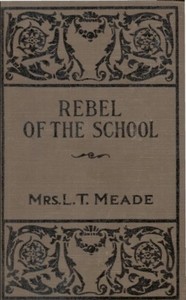
The Rebel of the School — Inside the Classic
(0 User reviews)
122
Project Gutenberg
2005
Not confirmed
Schools -- Fiction
Readers of public-domain and historical texts
Project Gutenberg digital edition
en
Edition facts
Words
103,562
Reading time
451 min
Text sections
9
This digital edition of The Rebel of the School — Inside the Classic is described by source-level measurements including 103,562 words, 7 hr 31 min estimated reading time, and 9 detected text sections.
The text analysis averages about 13.1 words per sentence, while the detected sections provide another way to judge how the source is divided.
Project Gutenberg metadata also associates the work with “Schools -- Fiction,” connecting these edition facts with the source record’s subject description.
Source:
Project Gutenberg record #15839
This editorial note examines the structure, recurring images, and movement between scenes in L.T. Meade's school story, focusing on how the opening 'sent to Coventry' punishment, the contrast between high and low life, and Kathleen's impulsive energy shape the narrative.
Read the complete public-domain text at its original source.
Read on Project GutenbergThe novel opens with a precise institutional detail: the Great Shirley School, endowed a century earlier by Charles Shirley, is governed by an all-female board and limits its enrollment to four hundred pupils, one hundred of whom are foundationers. This factual framework quickly gives way to the emotional weight of the title phrase—'Sent to Coventry!'—a social ostracism that becomes the story's first structural pivot. The narrative then moves between two distinct spheres: the regulated school corridors and the private, less formal spaces of lodgings and cottages. Kathleen O'Flynn, introduced as 'the Wild Irish Girl,' brings a contrasting energy of impulsive speech and dramatic gestures, often marked by exclamations and rapid shifts in mood. Her language—'the top of the morning,' 'scrumptious,' 'the creature'—sets her apart from the more measured voices around her.
The Architecture of Exclusion and Inclusion
The school's founding rules—four hundred pupils, a mix of foundationers and fee-payers—establish a social hierarchy that the plot repeatedly tests. The opening chapter's title, 'Sent to Coventry!,' signals a ritual of exclusion that recurs as a narrative device. Kathleen's rebellion is not merely against authority but against the invisible boundaries that separate the 'paying girls' from the foundationers. The text traces her movements from the school building to private homes, each location carrying its own set of rules. Mrs. Tennant's house, for instance, becomes a space where Kathleen's exuberance clashes with domestic routine—she dashes upstairs, shouts news, and ignores dress codes. The contrast between the school's regulated order and the lodgings' relative freedom creates a rhythm of constraint and release.
Recurring Images: Boxes, Blouses, and the 'Briny'
Certain objects and phrases recur with emblematic force. The 'box from Dublin' containing new clothes is a tangible symbol of Kathleen's connection to a world beyond school—a world of Aunt Katie O'Flynn, who is 'crossing the briny.' The blouse, mentioned in the excerpt as a 'satin blouse' worn to school, becomes a marker of Kathleen's disregard for propriety. The sea itself is invoked as a boundary to be crossed, linking the Irish aunt's arrival to the promise of transformation. These images are not merely decorative; they anchor Kathleen's identity in a geography of movement—from Ireland to England, from the school to the city. The narrative's attention to such details suggests that material objects carry emotional weight, serving as bridges between the domestic and the institutional.
Movement Between Scenes: From Corridor to Cottage
The story's pacing depends on swift transitions between public and private spaces. A typical sequence moves from the school's crowded corridors to a quiet street corner where Ruth waits, then to a cottage interior where Aunt Church presides. These shifts are often marked by Kathleen's hurried exits—'I must be off'—and her breathless announcements. The dialogue carries the burden of scene-setting; characters frequently narrate their own movements ('She dashed upstairs,' 'running as fast as she could'). This technique keeps the reader oriented while emphasizing the characters' restless energy. The contrast between the school's collective life and the intimate conversations in lodgings or at the 'White Cross Corner' creates a layered sense of place, where every location carries social implications.
Voice and the Weight of Dialogue
Kathleen's speech is the most distinctive element of the excerpts: it is peppered with Irish idioms ('the top of the morning,' 'is it my old lavender'), exclamations, and rapid shifts from anger to affection. Her outburst—'I think I hate you'—followed immediately by tears and an embrace, captures the volatility that drives the plot. In contrast, Ruth's language is measured and logical, built around necessity and duty: 'I can't belong to two sides.' The dialogue does not merely advance the story; it reveals character through rhythm and vocabulary. The narrative voice itself remains largely neutral, allowing the characters' words to carry the emotional weight. This reliance on direct speech gives the scenes a theatrical quality, as if the reader is overhearing confrontations that define the social fabric of the school.
The Scholarship as Structural Fulcrum
The sixty-pound scholarship offered by Cassandra Weldon is not just a plot device but a structural fulcrum around which loyalty and ambition pivot. Ruth's decision to accept coaching from a rival faction creates a fracture that the narrative explores through a series of confrontations. The scholarship represents a path to economic independence—Ruth hopes to 'support granny and grandfather'—and thus carries real stakes. Kathleen's demand that Ruth 'do both' reflects her own refusal to accept the school's binary divisions. The tension between personal loyalty and institutional opportunity drives the middle sections of the novel, as the narrative moves between the scholarship examination, the secret society meetings, and the domestic spaces where these conflicts are negotiated.
Readers attentive to the novel's structure will notice how L.T. Meade uses physical movement—from school to lodgings, from public to private—to mirror the characters' emotional journeys. The recurring images of boxes, blouses, and the sea are not incidental but form a pattern that rewards close attention. The dialogue, especially Kathleen's distinctive voice, carries much of the narrative's energy. This edition invites you to trace these threads as they weave through the chapters, noting how the school's architecture of rules and the characters' restless movements create a story that is as much about place as about rebellion.
Re-reading the editorial notes on The Rebel of the School, I found myself lingering on Kathleen's impulsive energy and the quiet cruelty of the Coventry punishment. It reminded me, strangely, of an anthology of devil stories I once kept on my shelf. Both hold that tension between fiery rebellion and enforced stillness, like two different weathers in the same season. Devil Stories: An Anthology — Context and Discussion carries a similar flicker, I think, of wildness held just under the ordered page.
There are no reviews for this eBook.
There are no comments for this eBook.
Reader reflection
What did you think of this book?
Answer a few questions and save a private reflection on this device.
Your progress
0
/
10
2
How much did you enjoy the reading experience?
3
Would you pass this book on to a friend?
4
How easy was the book to follow?
5
How useful were the ideas in this book?
6
Did any part of the book feel personally relevant?
7
Did the book offer a fresh perspective?
8
What was its emotional impact?
9
In one sentence, what did you learn?
10