
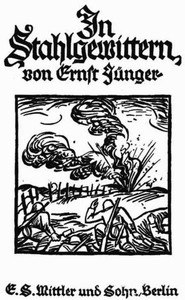
In Stahlgewittern, aus dem Tagebuch eines Stoßtruppführers by Ernst Jünger
Ernst Jünger was just 19 when he volunteered in 1914, bursting with romantic ideals of war. 'In Stahlgewittern' is his day-by-day account of the next four years, from his first skirmishes to the war's final, desperate battles. He was wounded multiple times, awarded Germany's highest military honor, and led stormtrooper units in some of the most ferocious fighting on the Western Front.
The Story
There's no traditional plot with a beginning, middle, and end. Instead, the book unfolds as a series of intense, vivid episodes. One entry might detail the eerie calm of a front-line dugout, listening to rats scuttle. The next plunges you into the chaos of an assault: the ear-splitting roar of artillery (the 'storms of steel' of the title), the confusion of advancing through smoke, and the sudden, intimate violence of hand-to-hand fighting. Jünger describes landscapes utterly transformed into moonscapes of mud and craters, and the bizarre, almost detached camaraderie among men living constantly with death. The narrative drive comes from Jünger's own transformation, as the eager recruit becomes a hardened, highly effective, and lethally pragmatic soldier.
Why You Should Read It
What makes this book so gripping and unsettling is Jünger's voice. He's not asking for your pity or preaching against war. In fact, he often finds a savage kind of glory in the struggle. His observations are chillingly precise—he notes the different sounds of various shell sizes, the way a body falls, the aesthetic of a ruined village at dawn. This lack of overt moralizing forces you to confront the experience on its own brutal terms. You're not getting a lesson; you're getting a transmission from hell, filtered through a keen and unflinching mind. It makes the horror more real than any condemnation ever could.
Final Verdict
This isn't a book for everyone. If you're looking for a clear anti-war message, you might find Jünger's perspective challenging. But if you want a primary source that drops you into the boots of a WWI soldier with zero filter, this is arguably the most powerful one out there. It's perfect for history buffs who think they've read it all, for readers fascinated by extreme human psychology, and for anyone who appreciates stark, phenomenal writing about the natural world—even when that 'nature' is a bomb-blasted wasteland. Be prepared: it's a book that sticks with you, long after the last page.
This digital edition is based on a public domain text. Knowledge should be free and accessible.
William Brown
2 years agoLoved it.
Carol Lewis
5 months agoI didn't expect much, but it creates a vivid world that you simply do not want to leave. A valuable addition to my collection.
Kevin Flores
5 months agoHigh quality edition, very readable.
Steven Rodriguez
5 months agoThis is one of those stories where it manages to explain difficult concepts in plain English. I would gladly recommend this title.


Donna Hernandez
2 years agoGreat digital experience compared to other versions.