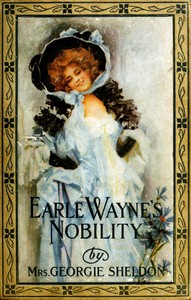
Earle Wayne's nobility — Reading Notes

(1 User reviews)   336
Sheldon, Georgie, Mrs., 1843-1926 Project Gutenberg 2023 Not confirmed
American fiction -- 19th century; Dime novels; Popular literature Readers of public-domain and historical texts
Project Gutenberg digital edition en

Edition facts

Words 151,206
Reading time 658 min
Text sections 50

The source record for Earle Wayne's nobility — Reading Notes measures this digital text at 151,206 words, 10 hr 58 min estimated reading time, and 50 detected text sections.

The text analysis averages about 21.5 words per sentence, while the detected sections provide another way to judge how the source is divided.

Project Gutenberg metadata also associates the work with “American fiction -- 19th century,” connecting these edition facts with the source record’s subject description.

An editorial note examining Mrs. Georgie Sheldon's diction, dialogue, and descriptive choices in Earle Wayne's Nobility, focusing on the courtroom opening, emotional restraint, and the use of legal and social language to convey character and class.
Share
Editorial Edition Score 4.9/5

Calculated from edition completeness, EPUB availability, text structure and catalogue metadata. Not a user rating.

How this score is calculated
  • Description quality20 pts
  • Title & short description10 pts
  • Source metadata20 pts
  • Text length15 pts
  • Chapters / structure15 pts
  • EPUB file integrity20 pts

Total of 100 points, scaled to a 2.5-5.0 range. Editions with an empty description or a missing EPUB file are not scored.

Edition quality

Read the Text

disapproval among the crowd, while deep-drawn sighs and expressions of sorrow showed that sympathy was strong for the prisoner at the bar, who for the last hour, while the jury was absent to decide upon the verdict, had sat with bent head and listless attitude, as if wearied out with the bitter trial to which he had been subjected.

Now, however, as he had been commanded “to look upon the jury,” his head was proudly lifted, revealing an exceedingly intelligent and handsome face, and a pair of fine dark eyes met those of the foreman unflinchingly while the least smile of scorn and bitterness disturbed the firm, strong mouth, showing that he had believed he had not much to hope for from him.

As the word was spoken which sealed his fate, a gray pallor settled over his face, and he dropped into his former attitude; otherwise he betrayed no sign of emotion.

Then something occurred which very seldom occurs in a crowded court-room.

A low cry of pain not far from the prisoner made every eye turn that way, and made him shiver as with a sudden chill.

A tender, sorrowful gleam crept into his dark eyes, the proud lips unbent and trembled slightly, and a heavy sigh heaved his broad chest.

The next moment a slender, girlish form started up from her seat, and a fair, flushed face was turned with eloquent pleading toward the grave judge, sitting like a statue in his chair of state, while an earnest, quivering voice rang out:

“Oh, sir, he is _not guilty_—I know that Earle Wayne _never was_ guilty of such a deed.”

A touching picture, and very sweet and attractive withal, Editha Dalton made, standing there so unconscious of herself, or that _she_ was guilty of any breach of decorum; her fair hair floating like gleams of sunlight upon her graceful shoulders, her sweet face flushed and full of pain, her deep blue eyes filled with tears and raised beseechingly to the judge, her delicate hands clasped imploringly and half-outstretched toward him, as if seeking for mercy in the sentence he was about to pronounce.

The old man’s face lost its habitual sternness for a moment, and his own eyes softened almost to tenderness, as he caught the sweet tones, and turned to look upon her, so beautiful in her appealing attitude.

It was not often that a culprit found one so earnest and beautiful to plead his cause. The able lawyer who had had charge of the case for the young man, with all his eloquence, had not moved him as did this fair maiden, with her flushed, pained face, her pleading eyes, her outstretched hands.

A murmur of sympathy sounded again throughout the room, and a wave of regret swept over the judge’s heart as he turned from the girl to the prisoner, feeling himself more than half convinced of the truth of her words, as he marked again the noble face and the honest expression of the clear, unflinching eyes.

But some one pulled Editha Dalton hastily back into the chair from which she had arisen, and a stern voice uttered in her ear:

“Edie! Edie! sit down, child! What _are_ you thinking of, when your own evidence did more toward convicting him than that of any one else?”

“Oh! I know it! I know it! but he is _not guilty_ all the same. It is only the cruel force of circumstances that makes him appear so!” she sobbed, wildly, burying her face, with a gesture of despair, in her handkerchief.

The judge’s keen ears caught the words, and his sharp eyes wandered again from her to the prisoner, a shade of uneasiness in their glance. He marked the pallor that had overspread his face, making him almost ghastly; the yearning, troubled look in the eyes now fixed so sadly upon the weeping girl; the firmly compressed lips and clenched hands, which told of a mighty effort at self-control and something whispered within him that the jury was at fault—that the evidence, though so clear and conclusive, was at fault and, since there could be no reprieve, to make the sentence as light as possible.

“Prisoner at the bar, stand up,” he said, and Earle Wayne instant arose.

Tall, manly, and with conscious dignity, he confronted the judge to receive his sentence, his eye never faltering, his face calm and proud, though still exceedingly pale.

“You have heard the verdict of the jury—have you anything to say?”

“Nothing, save what I have already said, your honor. _I am not guilty of the crime with which I am charged, and if I live I will yet prove it!_”

That was all; but the firm, unfaltering words seemed to carry conviction with them, and even the jury began to look grave and troubled, as if they, too, feared they had convicted an innocent man.

But the fiat had gone forth, and the judge, anxious to have the uncomfortable matter disposed of, pronounced the lightest sentence possible—“three years’ hard labor in the State prison at ——.”

A mighty sigh burst from the multitude, as if it had come from a single breast, as he ceased, and then a hush like death pervaded the room. It was the best the judge could do, and the very least they could expect; but it was sad to see a promising young man of twenty condemned to penal servitude for a term of years, be it ever so few.

The prisoner received it with the same calmness that had characterized him throughout the trial, only a slight quivering of the eyelids showing that he had heeded the words at all.

A moment of utter silence pervaded the room after the sentence was pronounced, the court was dismissed, and then the curious but sympathetic rabble went its way.

But, with winged feet, a slight form darted forward from the crowd, and, almost before he was aware of her presence, Editha Dalton was beside the prisoner, her pained, quivering face upraised to his.

She seized his hand in both of hers, she laid her hot, flushed cheek upon it, and sobbed:

“Oh, Earle, forgive me! forgive me! but I _had_ to tell the truth, and it has ruined you.”

“Hush, Edie—Miss Dalton. You have done perfectly right, and I have nothing to forgive.”

The young man spoke kindly, soothingly, but a sudden flush mounted to his brow, and the hot cheek against his hand thrilled him with a bitter pain.

“But it was my evidence that told most against you. I tried not to tell it all; but, oh! they made me, with their cruel questions. If I had not had to say that I _saw_ you, and that the bracelet was mine, perhaps, oh! _perhaps_ that dreadful jury would not have said you were——”

She stopped suddenly and shuddered, sobbing bitterly.

She could not speak the obnoxious word.

“Their _saying_ that I am guilty does not _make_ me so, even though I must pay the penalty as if I were. But I have the consciousness _within_ that I am innocent of the crime, and I shall live to prove it yet to you, Editha, and to all the world,” he answered, in clear, confident tones, with a proud uplifting of his head.

“You do not _need_ to prove it to me, Earle; I _know_ it already. I would take your word in the face of the whole world and a thousand juries,” Editha asserted, with unshaken confidence.

A glad light leaped into the young man’s eyes, and illuminated his whole face for the moment, at these words.

“Thank you,” he replied, in low, thrilling tones, and bending toward her: “it will be very pleasant to remember what you have said while I am——”

He stopped short—he could not finish the miserable sentence.

His sudden pause reminded the young girl anew of what was to come.

“Earle! Earle!” she cried, passionately, her face growing white and agonized, “I _cannot_ have it so! Three years! three long, long, wretched years! Oh, if I could only _do_ something! If I could only find those wretches who did the deed for which _you_ must suffer; if—oh, it is too, too cruel!”

“Hush, my little friend!” he said, bending nearer and speaking with deep tenderness; “your sympathy is very sweet and comforting to me, but it will unman me if I see you suffer so on my account.”

“Then I will be calm. I am thoughtless to wound you, when you have so much to bear already,” she interrupted, choking back the sobs that heaved her breast, and making an effort to be calm.

His lip trembled slightly as her blue eyes met his, so full of sympathy and sorrow.

“God knows that this _is_ a fearful trial to me,” he went on, drawing a deep breath, to free himself of the choking sensation in his throat; but, trying to speak more hopefully: “I am young, and three years will soon pass. I shall spend them to some purpose, too; and, Editha, with the knowledge of _your_ trust and faith in me, I shall be able to bear them patiently, and I shall come forth from the strange discipline better prepared, I have no doubt, to battle with life than I am at this moment. Every hour that is my own I shall spend in study; and, if _you_ will continue to have faith in me, I promise you shall never have cause to blush to own me as a friend in the future.”

“Earle,” Editha replied, quietly, yet earnestly, now entirely self-possessed, “you are just as brave and noble as you can be, and I am proud of you as my friend to-day—now—this moment! I shall think of you every day; I shall _pray_ for you every day; and, if they will let me, I will come once in a while to see you.”

“No, _no_; please do not, Edie. I could not bear that _you_ should see me _there_,” he cried, sharply, his face almost convulsed with pain at the thought.

“Ah, no—I did not think; but you _would_ not like it; but I want to do _something_ to comfort you and let you know that I do not forget you,” she said, sadly, a troubled look on her fair face. “Will they let me send you things?” she asked, after thinking a moment.

“Yes, that is allowed, I believe.”

“Then I shall send you something as often as I can; and you will be comforted a little, will you not, Earle, if you know you are remembered?” she asked, anxiously.

“Indeed I shall,” he said, deeply touched. “If I receive a flower, a book, a paper, even, I shall be greatly cheered.”

“You shall have them. Every week I will send you something, and you will know that there is one true friend who has faith in you,” she said, eagerly.

“God bless you, Miss Dalton. You are a little comforter, and my heart is lighter already. I have another friend—your uncle; he has been very kind, and has fought hard for me.”

“Dear Uncle Richard! I believe he _is_ one of the best men that ever lived,” Editha said, as her eyes sought a noble-looking man who was talking in an earnest and somewhat excited manner to a group gathered about him, and who had been Earle’s lawyer.

“I shall ever have cause to remember him gratefully. He did not give me much encouragement regarding the issue of the case—the evidence was so strong against me—and as we could get no clew to the real culprit, he feared the worst. But he promised to help me in my studies, should the case go against me, so that I may be ready for the bar when the term expires. So you see that things are not quite so dark as they might be,” Earle said, trying to speak hopefully.

The future looked dark enough at the best, she thought.

“If we could but have had more time—if you might only have another trial. Could you not have appealed, Earle?” she asked.

He shook his head sadly.

“It could have done no good. The really guilty ones have covered their tracks, and hidden their booty so effectually, that we could get no clue. But do not grieve for me, my little friend. Other innocent men have suffered for the guilty, and it can be no harder for me than it was for them. And,” lowering his voice, and speaking reverently, “I do not forget that there was once a Man who suffered for the sins of a _whole world_. For thirty-four years He meekly bore His cross, praying at the end that His enemies might be forgiven; and since He sees fit to send this one upon me, I must not murmur, though I own ’tis hard.”

Editha was weeping quietly now. The tears would come in spite of her, though she marveled at his words.

“Come, Editha, I have an engagement at four, and it lacks only fifteen minutes of that hour now.”

The words were spoken in cold, measured tones at her side.

The fair girl started, flushed, and glanced around at the speaker in surprise, as if unaccustomed to being addressed in that manner.

“Yes, papa, I will come; but I wanted to say good-by to Earle.”

“Ah, yes—ahem! I’m truly sorry for poor Earle,” Mr. Dalton said, addressing him with a good deal of coldness and a very poor show of sympathy, while he glanced impatiently at his daughter. “Very unfortunate complication of circumstances,” he went on, his gold repeater in his hand, and his eyes watching attentively the minute hand as it crept toward the hour of his engagement. “The evidence was strangely conclusive, and I wish for _your_ sake it could have been refuted; but really, Editha, we must not delay longer.”

Earle Wayne bowed coldly to the would-be comforter, and stepped back as if to end the interview.

He knew Mr. Dalton was no friend to him, and his words, which contained no sincerity, were intolerable to him.

“Good-by, Miss Dalton,” he said, holding out his hand to Editha, and which she had dropped upon hearing Mr. Dalton’s stern tones.

That gentleman frowned darkly at the act.

What right had a criminal to offer his hand to _his_ daughter?

“Good-bye, Earle,” she answered, clasping it warmly, while a big tear trickled down her cheek and dropped hot and burning upon it.

Then she turned quickly away, drew her vail over her tear-stained face, while Mr. Dalton led her from the room, himself bestowing only an indifferent nod upon the offending culprit.

CHAPTER II THE ROBBERY

About three months previous to the events related in the preceding chapter, on a dark and stormy night, two men might have been seen prowling around a stately mansion in an aristocratic portion of the city of New York. After carefully reconnoitering the premises, to see that no one was stirring within, one of them cautiously proceeded to cut out a pane of glass in one of the basement windows, while the other kept watch upon the sidewalk.

The glass was removed without the slightest noise, whereupon the burglar unfastened the window and lifted the sash. Then making a little noise like the twittering of a sparrow, he was immediately joined by his companion, and both disappeared within the house.

A few minutes later a third man coming along the street, saw the sudden glimmer of a light in one of the lower rooms of the mansion.

Something about it instantly attracted his attention.

It was a quick, sharp flare, and then seemed to go suddenly out.

He waited a minute or two, and the same thing was repeated.

“Aha! a burglar!” he muttered to himself. “I think I’ll have to look into this thing.”

He stopped, and his first impulse was to turn and go in search of a policeman.

Ah! if he had done so how much of future misery would have been saved him.

But upon second thought he concluded not to do so, and quietly slipped within the shadow of the great porch over the front entrance.

It seemed a long time that he stood waiting there, and he regretted that he had not gone for an officer.

He did not know how long the burglars had been there, and he had feared they would escape before he could return. But finally he heard cautious steps approaching from the rear toward the corner where he was stationed, and now he caught the sound of exultant whispers, that they had been so successful as to get out undiscovered with their rich booty.

The next instant two men emerged into view, bearing their plunder in a bag between them.

With a bound the new-comer darted forward and felled one man to the ground with a blow that sounded like the descent of a sledge-hammer, and then grappled with the other.

The burglar who had been felled had been only momentarily stunned, and, almost instantly recovering himself, he had quietly picked up the bag, which had also fallen to the ground in the melee, and made off with it, leaving his companion to shift for himself as best he could.

The combatants fought bravely and well, but the assailant being lighter than the burglar, and less experienced in pugilistic practice, gradually lost ground, and finally a well-directed blow from his antagonist laid him flat at his feet, when he, also, beat a hasty retreat, having first dropped something on the ground beside his victim.

Steps were now heard approaching upon the pavement; the noise of the scuffle had reached the ears of one of the protectors of the peace, and he was hastening to the rescue.

A light at the same time appeared at a window in one of the lower rooms of the mansion so lately robbed, while above a sash was thrown hastily up, and a slight, white-robed figure leaned forth into the night.

The light in the window below streamed directly out upon the fallen hero—alas! a hero no longer—who now began to gather himself and his scattered senses together once more. As he arose to his feet a cry from above rang out on the stillness of the night.

“Oh, Earle! Earle! how came you here, and what is the matter?”

The voice was that of Editha Dalton, and, springing forward under the window, the young man replied, reassuringly:

“Do not be alarmed, Miss Editha. I have had a fall, but am all right now. I’ll come and tell you to-morrow how I happened to be here to-night.”

“So, so, my fine young gentleman, you’ll come and tell the lady to-morrow, will you? I’m thinking mayhaps you will have a chance to tell some one else by that time, you disturber of the peace;” and, before Earle Wayne could scarcely realize what had happened, a pair of steel bracelets were slipped about his wrists, and he was a prisoner.

“You have made a mistake, sir,” he said civilly, to his captor, yet beginning to feel very uncomfortable in the position wherein he found himself. “I was trying to stop a couple of thieves who had just robbed this house, when one of them knocked me down and cleared.”

“Yes, yes; I find I always get hold of the wrong rogue—some one else does the deed and the one I catch is always so ‘innocent,’” laughed the policeman, with good-natured sarcasm. “Aha! what have we here?” he cried again, as his foot came in contact with some glittering object and sent it spinning on before him.

He stooped to pick it up, and, as the light fell upon it, he saw it was a costly bracelet, set with a solitare diamond surrounded with emeralds.

“That looks ‘innocent,’ don’t it now?” he said, holding it up to the light with a chuckle.

“That is Miss Dalton’s bracelet; I’ve seen her wear it,” the young man thoughtlessly and injudiciously admitted.

“Oh, yes, no doubt; and you thought mayhaps that them glittering stones might bring a pretty little sum. I came just in time to stop this little game. Come, I think I can accommodate you with lodgings to-night, my hearty.”

At this moment a man came out of the house upon the balcony in great excitement.

“Help! help!” he cried. “I’ve been robbed! Stop thief! stop——”

“Ay, I _have_ stopped him, and just in the nick of time, sir,” responded the policeman, leading Earle into view.

“_Earle Wayne!_” exclaimed Mr. Dalton, in greatest astonishment, as his glance fell upon him.

“Yes, sir, it is I; but I am no thief, as you very well know.”

The novel opens with a single word—"Guilty!"—delivered by the foreman of the jury, a moment that immediately establishes the high stakes and emotional intensity of the story. Mrs. Georgie Sheldon uses the courtroom setting not merely as a plot device but as a stage for contrasting public judgment with private virtue. The prisoner, Earle Wayne, is described with a "gray pallor" and a "smile of scorn and bitterness," signaling his awareness of the injustice. The author's choice to begin in medias res with a verdict rather than a crime sets a tone of moral certainty and sympathy for the accused.

Diction of the Courtroom

Sheldon's vocabulary in the opening chapter is deliberately legalistic and formal. Phrases like "sentence of the court," "knell of doom," and "sealed his fate" create a somber, almost biblical gravity. The foreman's voice is "deep, sonorous," and the judge sits "like a statue in his chair of state." This diction elevates the scene beyond mere melodrama, investing it with a sense of ritual and authority. The author also uses contrasting language for the heroine, Editha Dalton: her voice is "earnest, quivering," and her appearance is described with soft, luminous imagery—"fair hair floating like gleams of sunlight." This juxtaposition of harsh legal terms with tender, romantic language underscores the central conflict between institutional judgment and personal loyalty.

Dialogue as Revelation of Character

Dialogue in the excerpts serves to reveal character rather than advance plot. Editha's outburst—"Oh, sir, he is not guilty—I know that Earle Wayne never was guilty of such a deed"—is a direct, emotional appeal that breaks courtroom decorum. Her speech is marked by repetition and exclamation, conveying sincerity and desperation. In contrast, Earle's responses are sparse and controlled; he speaks only when commanded, and his smile is one of "scorn and bitterness." Later, Paul Tressalia's dialogue is described as "simple, manly fashion," and his words are reported indirectly, emphasizing his role as a narrator of facts rather than a participant in drama. Sheldon uses these differences in speech patterns to delineate class, gender, and moral standing.

Descriptive Pacing and Emotional Restraint

Sheldon's descriptive style alternates between rapid, dramatic action and slower, more reflective passages. The courtroom scene moves quickly from the verdict to Editha's cry, but then pauses for a detailed description of her appearance: "her sweet face flushed and full of pain, her deep blue eyes filled with tears." This pause allows the reader to absorb the emotional weight. Later, in Chapter XXVII, the narrative shifts to a more measured pace, detailing the legal and social steps Earle takes to clear his mother's name. The author uses phrases like "three months later" and "it was not long after this" to compress time, but she lingers on moments of emotional significance, such as Earle's anxiety over Editha's silence. This control of pacing keeps the reader engaged while maintaining a sense of realism.

Recurring Motifs of Nobility and Justice

The title's concept of "nobility" is explored through repeated motifs of honor, inheritance, and moral worth. The courtroom scene establishes Earle as a man who "never consciously committed a mean act," yet is condemned. Later, the restoration of his title is described as clearing his mother's character and returning her body to the "vaults of her ancestors." The language of social standing—"Marquis of Wycliffe," "Viscount Wayne"—is intertwined with moral language: Earle's "manly battling with the cold world" and Paul's "nobility of his nature." Sheldon uses these terms to argue that true nobility is a matter of character, not birth, a theme reinforced by the contrast between Earle's unjust conviction and his eventual vindication.

Readers attentive to Sheldon's authorial choices will notice how she uses the formal language of law and society to critique those very institutions. The novel's emotional power derives not from plot twists alone but from the careful calibration of diction, dialogue, and description. Pay particular attention to how characters speak and are described—these details reveal the moral landscape of the story more than any single event.

The rain tapped against the window as I finished the notes on Mrs. Sheldon’s courtroom diction, her way of letting silence carry the weight. It made me think of other quiet strengths, so I wandered to A Knight of the Cumberland — Story, Setting & Ideas and found the same restrained honor, spoken more in landscape than in law. That afternoon felt like a long, slow handshake between two old stories.

Henry Jones
2 weeks ago

5
5 out of 5 (1 User reviews )

Add a Review

Your Rating *
There are no comments for this eBook.

Reader reflection

How did this book work for you?

Your answers remain private and are stored only in this browser.

Your progress 0 / 10
1

Where are you in your reading?

2

Did this book hold your interest?

3

Is this a title you would suggest to others?

4

What was the reading difficulty like?

Related eBooks