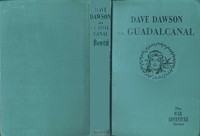
Dave Dawson on Guadalcanal — Reading Companion
Edition facts
The catalog record for Dave Dawson on Guadalcanal — Reading Companion provides practical reading context through 52,428 words, 3 hr 48 min estimated reading time, and 7 detected text sections.
The text analysis averages about 13.0 words per sentence, while the detected sections provide another way to judge how the source is divided.
Project Gutenberg metadata also associates the work with “World War, 1939-1945 -- Juvenile fiction,” connecting these edition facts with the source record’s subject description.
Calculated from edition completeness, EPUB availability, text structure and catalogue metadata. Not a user rating.
How this score is calculated
- Description quality20 pts
- Title & short description10 pts
- Source metadata20 pts
- Text length15 pts
- Chapters / structure15 pts
- EPUB file integrity20 pts
Total of 100 points, scaled to a 2.5-5.0 range. Editions with an empty description or a missing EPUB file are not scored.
Read the Text
There was a desk there manned by a couple of high ranking officers. The pilots in the room were filing past the desk, and obviously giving their names, and so forth, to the two officers. One of them was an infantry colonel, and the other was an Air Forces major. It was sight of the infantry colonel that caused both Dave and Freddy to stop dead, and gape. In short, once again they were meeting their old friend Colonel Welsh, Chief of Combined U.S. Intelligence.
"Oh-oh!" Dave murmured. "Do you see what I see, Freddy?"
"I most certainly do," the English youth replied. "Fact is, we might have guessed, what?"
"Yeah, something like that," Dawson grunted absently. "The colonel in the flesh, huh? Well, that means there isn't any clam bake coming up, that's certain. But I guess we must have fallen down on that last job he gave us, Freddy. And he's very disappointed."[A]
"Eh?" Freddy gasped. "What do you mean, we must have fallen down on the job? Don't be silly!"
"Well, look at all these other pilots here," Dave replied. "Must be he doesn't think we're so hot any more, and is going to give us plenty of help on the next job--whatever it is."
"Man! How some people hate themselves!" Freddy Farmer snorted. "But I wonder what's up; what he has up his sleeve?"
"Well, there's one way to find out, I guess," Dave grunted, and started to move. "Get into line, here, and ask him when it comes our turn."
As Dave and Freddy were the last two to enter the room, and were therefore at the end of the line, the room was pretty well cleared of pilots when they reached the desk. Colonel Welsh was bent over a list of names and didn't look up.
"Name, rank, and former unit?" he asked mechanically.
"Dawson, sir. Captain. Returned from special assignment in China."
Colonel Welsh stiffened, let his pencil drop, and looked up quickly. A broad smile of welcome lighted up his thin, sun-bronzed face. He didn't bother to reply to their salutes. He simply put out his hand.
"So you made it, Dawson, and you, too, Farmer?" he said. "Good! I've been worrying you wouldn't get under the wire. How are you?"
"Fine, sir," Dave grinned as he shook hands. "And sort of curious, of course."
"Oh, quite, sir," Freddy echoed, and extended his hand. "And I fancy Dawson has expressed it for both of us."
"Well, stay curious for a while, boys," the colonel replied with a dry chuckle. "But here, I want both of you to meet Major Taylor. He's seen a bit of action in this mess, too. Take a look at his decorations, if you don't believe me. Major Taylor, Captains Dawson and Farmer."
The two youths shook hands with the major, and both liked him instantly. He had twinkling grey eyes that could become as cold as ice cubes when he wanted, and a warm smile that showed he always meant what he said from the heart.
"Big moment Number One for me today, Captains," he said. "I've heard about you two plenty, of course. So I'm mighty glad to meet you. Maybe we can have fun together. With the Jap rats, I mean."
"Nothing would suit me better, Major," Dawson replied, and meant it, too.
"Definitely, Major," Freddy Farmer added. And then with a faint smile, "But _where_, sir?"
"Oh, haven't I told you yet?" Colonel Welsh spoke up with a quick laugh. "Why, we're all making a little flight to--well, to give you something to think about, Farmer, let's call it a little flight to nowhere!"
[Footnote A: _Dave Dawson With The Flying Tigers._]
"Flight to nowhere, eh? What the blasted blue blazes did he mean by that? Is this thing going to be fitted with wings, or something, I'd like to know?"
It was Freddy Farmer who spoke the words. With Dave Dawson, and some two dozen Army, Navy, and Marine Corps pilots, he stood on the deck of an American destroyer steaming out of Sydney into the Tasman Sea at full knots. Just five hours ago they had met Colonel Welsh at H.Q., and--and learned nothing except that they were going on a flight to nowhere. Shortly after the Colonel had imparted to them that choice bit of "secret information," he had sent them on their way to enjoy the sights of Sydney for a few hours, and then to report to a certain Army pier at such and such a time.
Well, they had seen most of the sights of Sydney in a restaurant where Freddy Farmer was at least happy, because the place was stocked with far more food than he could possibly eat at one sitting. And when it was practically coming out of his ears, they left the place and took a short walk about town. At the proper time they reported to the pier where a bunch of Army, Navy, and Marine Corps pilots were already gathered. Everybody was full of questions, but there wasn't a single answer in the whole crowd. Then presently a sleek, battle grey destroyer slid in and tied up long enough for the whole gang to be taken aboard. And now the destroyer was cleaving the night-blackened waters of Sydney Harbor and sending spray flying well back over the bridge.
"Don't ask me, sweetheart," Dawson grunted, and stared down at the black waters swirling past the destroyer's hull. "Could be they're going to take us out and drown the lot of us. How do I know?"
"Well, you could at least be helpful enough to make a sensible guess!" Freddy snapped. "Confound you Yanks, anyway! I never saw such mysterious business!"
"Listen to the guy!" Dawson hooted. "You forget I've been to England, and served in the R.A.F. with you. For cat's sake, it usually takes a ton of TNT to get an Englishman to open his mouth long enough to admit that the sun is shining. Us Yanks mysterious? Pal, we're blabber-mouths compared with your British Intelligence Service. And don't argue with me, because I've had experience, I have!"
"Rot!" the English youth growled. "But never mind, anyway. The point is, where are we going?"
Dawson said nothing. He just leaned a bit more over the chain railing, and stared down at the water.
"Well, can't you make a guess?" Freddy insisted.
Dave started to shake his head, but on second thought checked himself. He turned and peered at Freddy in the gloom.
"_I_ don't have to guess, Freddy," he said quietly.
Young Farmer stiffened, caught his breath in a gasp, and leaned close.
"What's that, Dave?" he breathed excitedly. "You know? You know where we're going?"
"Yes, I know," Dawson murmured, as though it were the most natural thing in the world for him to know. "Sure, I know, pal."
Freddy Farmer waited just two split seconds before he practically exploded in a shower of small pieces.
"Then for goodness' sake, tell me, Dave!" he choked out. "Don't keep me like this, blast you! _Where are we going?_"
"You want to know, huh?" Dave echoed, and bent his head close to Farmer. "You want to know where we're going? Well, see where my hand is pointing? Out there beyond the bow of this tub? Well, we're going out there, sweetheart."
Freddy groaned, choked and spluttered, but before he could spit out a single word, Dawson pushed back the cuff of his jacket to reveal his wrist watch. The radium-treated dial showed that it was exactly five minutes to midnight.
"So that makes us one all for the day, Freddy," he chuckled. "I told you I'd get you to bite on something before the day was over. I warned you to keep up on your toes. Okay, and not sore, huh?"
"Just plain disgusted, you blighter!" Freddy snarled. "Man! Why I put up with you day after day, I don't know!"
"Maybe it's love," Dave chuckled, and jumped quickly as the English youth aimed a booted foot.
Freddy's foot didn't connect with certain places, however. And he didn't make a second try. He simply snorted to himself and joined Dave in staring silently down at the black water flowing past. For perhaps some ten of fifteen minutes neither youth said anything. Each seemed to be quite content with his own thoughts. Eventually, though, Dave broke the silence.
"Well, there's one thing, anyway, Freddy," he said. "Wherever we're going, we're going to get there soon, I guess."
"Would that be the beginning of another side-splitting act of yours?" Freddy growled. "And what do you mean by it, anyway?"
"It's the detective in me," Dawson replied, unruffled. "Here we are on a destroyer heading out to sea in pitch darkness, but I haven't been assigned any place to sleep, have you?"
"By Jove, that's right, Dave!" young Farmer exclaimed excitedly. "We haven't, have we? Good grief! Do you suppose this is taking us to New Zealand, and we've got to ride on deck all the way?"
Dawson didn't answer for a moment. He threw back his head and stared up at the trillions upon trillions of stars that glittered and gleamed in the jet black sky.
"My celestial navigation tells me we're headed more toward New Caledonia than New Zealand," he said. "But I'll bet you a pair of flying goggles that we're not going to either of those places."
"I won't take the bet, because you're too blasted lucky," Freddy spoke up quickly. "But anyway, why didn't you think so?"
"Well, I got hit by a sudden hunch, while we were waiting on the pier for this tin can to tie up," Dawson said slowly. "And I got chewing the fat with some of the others there. Know something, Freddy?"
"Well, I will after you tell me, of course," the English youth replied. "What?"
"Keep your shirt on; a guy has to take a breath now and then, you know!" Dave grunted. "Well, I didn't run into a single guy who hasn't had some experience flying off an aircraft carrier. If you want my guess, it's that this load of pilots is being taken out to some carrier force waiting way off shore."
"I wonder, I wonder!" Freddy Farmer murmured after a long pause. "Why would a carrier force be so top hat as not to come in and get us, I'd like to know?"
"Call it 'high hat' next time, Freddy," Dave corrected gently. "White folks will think you're English, if you--"
"Now, look out, my good man!" Freddy began menacingly. "I'll have you know that I'm--"
"And I don't blame you for being proud that you're English, pal," Dave broke in with a chuckle. "So would I be, if I wasn't Yank. Okay, skip the funny crack. The reason a carrier force wouldn't come in to pick us up is probably because of that one word pronounced _spies_! One thing we want to keep plenty secret out here in the Southwest Pacific is the location of our carrier task forces. So we were loaded aboard this tin can at night, and are being sneaked out to one. Catch on?"
"Not definitely," Freddy Farmer muttered, and scowled in the darkness. "Seems to me that a carrier task force at sea would have its own pilots, and what not. Besides, a lot of us aboard this destroyer are Army Air Forces pilots."
"So what?" Dave said, and shrugged. "So maybe the Navy needs help in the air, and knows just where to get it."
"Better keep those remarks under cover, or a certain Army pilot may be reported lost overboard!"
Dave jumped straight up at the sound of the voice at his elbow, and whirled around in midair. When his feet came back on deck again he saw Colonel Welsh standing in front of him.
"Gosh, you scared me, Colonel!" he gasped. "I thought a Navy pilot _had_ overheard me!"
"Good thing one didn't," the senior officer chuckled. "Plenty of rivalry between you Army and Navy pilots. And I'm afraid there are hot heads on both sides. Well, how are you enjoying a ride on a destroyer, eh?"
"Oh, just too, too wonderful, sir!" Dawson replied with a groan. "But I didn't see you on the pier, Colonel. When did you come aboard? At the last minute?"
"No, I came aboard much earlier," the Colonel replied. "I've been up in the commander's quarters."
"Er ..." Freddy Farmer began, and faltered. "I mean," he began again, "I don't suppose he told you, sir, where we are headed?"
The colonel laughed and shook his head.
"He didn't have to, Farmer," he replied. "You see, I already knew. But hold on with your questions, because I don't mind telling you, now that we've shoved off. We're making for a rendezvous with a carrier task force a couple of hundred miles out to sea. We should contact it just about dawn. You chaps, if you want to sleep, will have to do it on the deck, I'm afraid. I wouldn't advise it, though, the way this ship is smashing the swells. And the commander says that it will be even rougher outside."
"Thanks, I think I'll stay awake," Dawson laughed. Then, in a serious tone, "And when we reach the carrier task force, sir?"
"Why, we go aboard, of course," the colonel replied. "There are two carriers. The Hawk, and the Carson. Half of you will go to one, and half to the other."
"And then, sir?" Dave persisted.
"For military reasons, Dawson, I'm afraid I didn't hear you," the senior officer replied. "Count on it for something interesting, though. And not easy by any manner of means. Fact is, all this may be simply the beginning of a very costly waste of time, and effort."
The Chief of Combined U.S. Intelligence spoke the last while staring flint-eyed out over the rail, and as though he were repeating his own thoughts aloud to himself. A million questions piled up on the tip of Dave's tongue. And it was the same with Freddy Farmer. However, neither one of them spoke for fear it might stop the Colonel from saying more. However, they were both out of luck. The senior officer grunted, shook himself a little, and turned to them with a smile that showed his even white teeth even in the gloomy light.
"Well, I wish I had time, now, to get a first-hand report from you boys of that trip to Chungking you made," he said. "And your experiences with the Flying Tigers. However, I only popped out for a breath of air. There's still a lot of paper work for me to do. I'll be seeing you soon, though; don't worry. A lot of you, probably, as I'll be aboard your carrier, the Carson. Until then, good luck!"
Dave groaned, but not loud enough for Colonel Welsh to hear as he walked away.
"Even him!" Dave sighed. "Good luck to you, and good luck to you--and nuts! If anybody should suddenly say, 'Bad luck' to me just once, I think I'd keel over in a dead faint!"
"Oh, come off it, Dave!" Freddy grated. "What do you expect folks to say? Man, but you're getting to be a testy blighter! So we are going to a carrier task force, eh? Well, I'll have to admit that for once you were right. But I certainly wish he'd told us more."
"And you can repeat that!" Dave grunted. "And all this may be simply the beginning of a very costly waste of time and effort. That, my little friend, did not sound so nice to me. It didn't even sound close to nice."
"Quite," Freddy said with a little sigh. "But nothing's nice about this blasted war, you know. So we might just as well make the best of it. And--"
The English youth choked off the rest as the alarm horn sounded aboard the destroyer, and the craft seemed virtually to spin around to port the length of her keel, and then fairly streak across the water.
"The submarine detector has picked up something, I guess!" Dave muttered, and took a firmer grip on the chain rail. "Now, wouldn't it be sweet to get torpedoed even before we get any place?"
"You say the happiest things!" Freddy got out in a slightly strained voice. "Shut up, and use your eyes. Maybe we'll sight something."
"In this darkness?" Dave echoed, and promptly leaned over the chain rail and strained his eyes at the black water beyond the bow. "Don't be silly. Not unless it's trimmed with neon lights."
For perhaps five minutes the destroyer pounded through the night sea at emergency knots. Then the all clear horn sounded again. The destroyer's speed slackened off slightly, and her bow came cutting around to the previous course. A faint sigh of relief seemed to whisper along the spray-drenched decks. And then presently everything was as normal as before.
"Probably one of ours," Dave grunted. "Or just a false alarm. But either suits me okay. There's something about getting torpedoed and drowned that I just don't like."
"Quite, oh quite!" Freddy Farmer echoed. "If a chap has to cop one, much better to cop it in the air. Definitely cleaner, you know."
Dave nodded, but didn't make any comment. And once more the two air aces lapsed into silence and stood at the chain rail peering out over the night-shrouded waters, each with the same thought unspoken in his mind. Way out there ahead were two Yank aircraft carriers waiting to take them aboard. And when that was accomplished, then where to next? A tantalizing question that only time would answer for them. And the smirking gods of war, too, of course, if the two youths could but hear their death rattle voices!
_Instructions For Eagles_
The sun was hardly a faint band of yellow white light on the eastern horizon when the speeding destroyer came within sight of the waiting task force. Despite the bucking and pitching of the craft during the dark hours of night, a good many of the Army, Navy, and Marine Corps pilots aboard had managed to curl up somehow on the deck and go to sleep. It was not the case with Dave and Freddy, however. They remained awake the whole time talking of this and that, or just staring thoughtfully out across the vast stretches of night-shrouded water.
And so they were among the first to see the faint shapes of the task force low down on the horizon. As usual, Freddy spotted them first and nudged Dave excitedly.
"There they are, Dave!" he cried, and pointed. "Right up ahead, there. Lord! A mess of them, what? Looks like the whole blasted Navy. I can count two carriers, half a dozen cruisers, and twelve destroyers!"
"Thanks, that saves me the trouble," Dave grunted, and squinted ahead. "Yup! That's a task force sure enough. And, boy, look at those destroyers skipping around! Fat chance Jap subs would have getting close to those flat-tops. I wonder which is the Carson? They both look the same to me."
"I don't care which is which," Freddy replied, and kept his gaze riveted on the flotilla of battle craft drawing closer and closer. "I'd much rather know where they are headed. After we've been put aboard, I mean."
"Well, keep your shirt on, sweetheart," Dave choked him off. "You'll find out soon enough, and--Oh yeah! There they are. I was wondering if either of those flat-tops had any planes up. Didn't think they'd leave it all to the destroyers. The whole works is hardly making any headway."
Freddy Farmer didn't make any comment. He had followed the direction of Dave's pointing hand with his eyes, and was watching the three sections of Navy scout-patrol planes circling about high in the air above the coasting task force. And a moment or two later, as though the task force commander had heard Dave's comment and decided to do something about it, every ship picked up speed and swung from a southeasterly course to one due south.
"What the deuce, now?" Freddy Farmer breathed to nobody in particular. "Why are they heading south? Have the Jap rats put a landing party ashore on Admiral Byrd's Little America?"
"Well, they've sure got a long ways to go to reach it!" Dave said with a laugh. "But if you use your head and your eyes, little man, you'll soon catch on to the idea that the carriers are about to take their planes aboard. So they've headed into the wind, which happens to be from the south. Now, anything else you'd like explained?"
The novel opens with Dave Dawson and Freddy Farmer in a Flying Fortress over the Indian Ocean, their banter establishing a familiar dynamic: Dave’s casual, chocolate-munching ease contrasts with Freddy’s sharper, more alert demeanor. The dialogue—Dave grunting “Ub glub dish blub ice” and Freddy retorting “Don’t talk with your mouth full, little boy!”—immediately signals a series formula: lighthearted repartee before the mission turns serious. The setting is deliberately vague (“some islands called the Dutch East Indies”), and the war is present only as a distant threat. This opening primes readers for a story where tension builds gradually from everyday moments.
Banter as a Narrative Engine
The early excerpts rely heavily on dialogue to characterize the two protagonists and to advance the plot. Dave’s relaxed, slangy speech (“Definitely nice!”) and Freddy’s clipped British retorts create a rhythm that carries the reader through exposition. When Freddy reminds Dave that “there is still a world war going on,” the exchange does more than inform—it establishes Freddy as the cautious foil to Dave’s impulsiveness. This pattern recurs throughout the excerpts, with the banter serving as a bridge between action sequences. Notably, the humor is undercut by the stakes: even as Dave jokes, the reader knows the Pacific theater is active. The author uses this contrast to maintain a light tone without ignoring the gravity of the setting.
The Shift to Overheard Intelligence
A pivotal middle excerpt shifts the narrative mode from dialogue-driven adventure to suspenseful eavesdropping. Dave, hidden, overhears a Nazi U-boat commander and a Japanese officer discussing American plans to attack Guadalcanal. The language becomes clipped and urgent: “The American attack on Guadalcanal is to start soon… If Admiral Sasebo is to wipe out any successes…” This section relies on the dramatic irony of the reader knowing what the Americans do not. The author conveys information through the villains’ conversation, a technique that builds tension without requiring action. Dave’s internal reaction—“a hundred and one thunderbolts were crashing through Dawson’s brain”—shows the emotional weight of the intelligence, but the excerpt leaves the outcome uncertain, as the plan to transfer prisoners to a seaplane is announced.
Structure and Pacing in the Excerpts
The excerpts reveal a deliberate structural pattern: each chapter ends with a hook that propels the reader forward. Chapter One closes with Freddy’s warning about enemy planes, while the later excerpt ends with the U-boat commander’s decision to launch a seaplane. The author alternates between scenes of relative calm (the banter in the bomber) and high-stakes revelation (the overheard conversation). This rhythm is typical of serial adventure fiction, where each installment must offer both continuity and a new complication. The excerpts also show a reliance on cliffhangers—the word “CHAPTER TWELVE Helpless Heroes” appears immediately after the plan is hatched, suggesting that the next chapter will focus on the protagonists’ predicament. First-time readers should note how these breaks create momentum.
Voice and Historical Framing
The author’s voice is direct and colloquial, with a preference for action verbs and short sentences. Descriptions are functional: “the broad expanse of sun-flooded Indian Ocean” sets a scene quickly, while the villains speak in stilted, formal English (“Honorable Comrade,” “Herr Kommanda”). This contrast reinforces the us-versus-them dynamic. The historical setting—the Guadalcanal campaign of 1942-43—is referenced but not explained, assuming a contemporary reader’s familiarity. The excerpts avoid detailed exposition about the war, instead using place names (Truk, Solomons) and ranks (Admiral Sasebo) as shorthand. For a modern reader, this framing means the novel relies on prior knowledge of the Pacific War, but the core conflict—good versus evil—is clear from the villains’ dialogue.
Character Dynamics Through Action
While the excerpts focus on Dave and Freddy, their personalities emerge through action and reaction rather than description. Dave’s first instinct upon hearing the enemy plan is to suppress his alarm: “he didn’t even dare glance sidewise at Freddy Farmer’s face.” This small detail reveals his protective instinct and the pressure of leadership. Freddy, though less present in the later excerpt, is established as the more cautious partner. The author uses their partnership to model teamwork under duress, a common theme in juvenile war fiction. The excerpts do not show them in combat, but the tension of the overheard conversation suggests that their resourcefulness will be tested. Readers should watch for how their banter evolves under pressure.
The excerpts from Dave Dawson on Guadalcanal offer a clear entry point into a formulaic but energetic series. The interplay of humor and suspense, the reliance on overheard intelligence, and the clipped, action-oriented prose all serve to keep the pages turning. For a first reading, pay attention to how the author balances the protagonists’ camaraderie with the escalating stakes of the Pacific war. The novel does not aim for historical depth, but its use of real locations and enemy dialogue grounds the adventure in a recognizable conflict. Approach it as a period piece that prioritizes momentum over nuance.
There’s something almost tender about how the boys’ banter in Dave Dawson on Guadalcanal gives way to that hushed, overheard intelligence—like remembering how suspense once felt simpler, more certain. It reminds me of the quiet clockwork in Master Humphrey's Clock — Themes and Context, where time itself seems to hold its breath. Odd, how old books keep those pauses alive. Wars fade; waits remain.
There are no reviews for this eBook.
How will you remember this book?
Save your reaction, strongest insight, and memorable passage.