
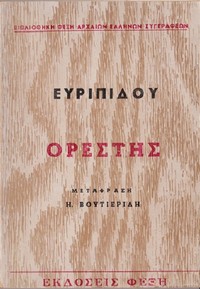
Ορέστης by Euripides
Let's set the scene. It's six days after the most infamous matricide in Greek myth. Orestes is exhausted, feverish, and completely broken. He's being tormented by the goddesses of vengeance, the Furies, who only he can see. His sister Electra watches over him, but she's barely holding it together herself. Outside their door, the people of Argos are voting on whether to execute them both by stoning. Their uncle Menelaus (Helen's husband) has just sailed into town with a whole army, but he's more interested in political maneuvering than saving his niece and nephew.
The Story
The plot is a pressure cooker. Orestes and Electra, feeling utterly abandoned, hatch a desperate plan. If they're going down, they'll take their enemies with them. Their target? Helen, the woman whose beauty started the Trojan War. When that plan spirals out of control, they grab Helen's daughter, Hermione, as a hostage. The play builds to a wild, violent standoff at the palace. Just when it seems like there's no way out, the god Apollo shows up. He delivers a classic 'deus ex machina' resolution, sorting out marriages, exiles, and divine pardons. But the neat ending feels almost ironic after the raw, human chaos we've just witnessed.
Why You Should Read It
Forget marble statues of perfect heroes. Euripides gives us people. Orestes isn't noble; he's a wreck. His guilt isn't poetic; it's a debilitating sickness. Electra isn't a supportive sister; she's a co-conspirator pushed to the edge. Their bond is the heart of the play—toxic, codependent, and fiercely loyal. Euripides makes you understand their panic and their rage. He asks if society has any room for people who commit awful acts, even if they were told to do them by the gods. The political mob mentality feels ripped from today's headlines.
Final Verdict
This is not a beginner's Greek tragedy. It's better to read the 'Oresteia' trilogy by Aeschylus first to get the backstory. But if you want a play that dives headfirst into the psychological aftermath of trauma, this is your book. It's perfect for fans of complex, morally grey characters, for anyone who loves a tense, talky thriller, and for readers who think ancient drama can't possibly feel urgent and relevant. It's a messy, brilliant, and deeply uncomfortable masterpiece.
This text is dedicated to the public domain. Feel free to use it for personal or commercial purposes.
Dorothy Hernandez
7 months agoFinally found time to read this!
Mason Young
6 months agoAfter finishing this book, the narrative structure is incredibly compelling. I couldn't put it down.
Paul Harris
1 year agoThis is one of those stories where the arguments are well-supported by credible references. Definitely a 5-star read.
Jackson Smith
1 year agoThe fonts used are very comfortable for long reading sessions.








Christopher Jackson
1 year agoI took detailed notes while reading through the chapters and the critical analysis of current industry standards is very timely. I am looking forward to the author's next publication.