1

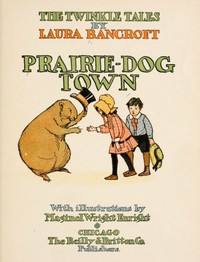
Prairie-Dog Town — Inside the Classic
(0 User reviews)
337
Project Gutenberg
2014
Not confirmed
Prairie dogs -- Juvenile fiction
Readers of public-domain and historical texts
Project Gutenberg digital edition
en
Edition facts
Words
7,873
Reading time
35 min
Text sections
2
The source record for Prairie-Dog Town — Inside the Classic measures this digital text at 7,873 words, 35 min estimated reading time, and 2 detected text sections.
The text analysis averages about 18.7 words per sentence, while the detected sections provide another way to judge how the source is divided.
Project Gutenberg metadata also associates the work with “Prairie dogs -- Juvenile fiction,” connecting these edition facts with the source record’s subject description.
Source:
Project Gutenberg record #45379
In this early 20th-century children's fantasy, L. Frank Baum sends Twinkle and Chubbins into an underground prairie-dog town, where the narrative moves between surface picnic and subterranean society, using tunnels, meals, and performances to structure the visit.
Read the complete public-domain text at its original source.
Read on Project GutenbergFrom the first chapter, Prairie-Dog Town establishes a clear structural contrast between the open Dakota prairie and the hidden world below. The picnic under a bridge—a liminal space—leads to a descent into an organized underground community with its own mayor, magician, and social rituals. Baum uses the children's journey as a framing device: the surface chapters bookend a sequence of underground episodes, each introducing a new character or custom. The movement between scenes is guided by physical passage—tunnels, archways, and staircases—and by the children's curiosity. The narrative rarely lingers; it proceeds from one encounter to the next, much like a guided tour.
The Picnic as Threshold
The opening chapter, “The Picnic,” does more than introduce Twinkle and Chubbins. It establishes the prairie as a flat, treeless expanse where shade exists only under a bridge—a man-made structure that becomes a gateway. The description of Edgeley as “on the edge of civilization” sets up a boundary that the children will cross. The picnic itself is a brief, almost perfunctory event; the real action begins when they notice the prairie-dog holes. Baum uses the picnic as a narrative springboard, not a destination. The children's descent into the burrow is described matter-of-factly, without fanfare, emphasizing that the extraordinary is adjacent to the ordinary. This structural choice—a mundane activity leading to a fantastic journey—recurs in Baum's other works, but here it is compressed into a single chapter, making the transition swift and economical.
Underground Architecture and Movement
Once below ground, the story becomes a sequence of rooms and corridors. The prairie-dog town is described as a network of “winding passages” and “halls connecting all the different houses of importance.” The children are led by Mrs. Puff-Pudgy, who carries a candle and navigates without signposts. Baum emphasizes the labyrinthine quality: “They turned this way and that, in quite a bewildering manner.” This movement is not random; it structures the narrative, moving the children from the mayor's house to the magician's home and eventually to a luncheon. Each location is a set piece, introduced by a guide and described with attention to decoration—colored clay walls, painted arches, and brightly lit rooms. The underground is a complete society, with its own rules of hospitality and social hierarchy. The children are passive observers, moved from scene to scene by their hosts, which gives the story a guided-tour rhythm.
The Luncheon as Social Microcosm
Chapter VII, “The Mayor Gives a Luncheon,” is the longest sustained scene in the excerpts. It functions as a social set piece, introducing a cast of characters—Mr. Sneezeley, Dr. Dosem, Mrs. Chatterby, Mrs. Fuzcum—whose names telegraph their traits. The meal itself is a catalog of prairie-dog cuisine: milk-weed soup, boiled corn, thistle-leaf salad, barley bread, and prairie-bee honey. The children taste politely but cannot eat much, a detail that underscores their outsider status. Baum uses the luncheon to display the town's customs: the mayor's pride in his grandfather's artistry, the maids in white caps, the magician's insatiable appetite. The scene is static—everyone sits and eats—but it is the narrative center, where the underground society is most fully displayed. After the meal, entertainment follows: a song and a minuet, then the children's request to leave. The structure mirrors a formal visit: arrival, meal, performance, departure.
Recurring Images: Light, Food, and Guides
Throughout the excerpts, three images recur. Light marks transitions: the candle blown out upon entering the mayor's brightly lit house, the “brilliantly lighted” dining room. Darkness and illumination signal shifts between spaces. Food appears not only at the luncheon but also in the magician's home and in references to prairie-dog diets. It is a marker of civilization and difference—the children cannot eat the food, just as they cannot stay underground. Guides lead the children at every step: Mrs. Puff-Pudgy, the mayor, the magician. No character explores independently; movement is always directed. This reliance on guides reinforces the children's role as visitors in a structured world. The recurring images create a cohesive sensory experience: the dim tunnels, the taste of unfamiliar roots, the constant presence of a host. They also subtly reinforce the theme of boundaries—between human and animal, surface and underground, known and strange.
The excerpts reveal a story built on clear structural divisions: surface and underground, arrival and departure, observation and participation. Readers may note how Baum balances description with dialogue, and how the children's limited agency keeps the focus on the invented society. The book rewards attention to the small details of setting and custom, which are more developed than the plot itself. For those interested in Baum's early fantasy, Prairie-Dog Town offers a compact example of his method: a simple journey into a fully imagined world, paced by movement from one curious scene to the next.
I keep thinking of how Baum’s prairie-dog town felt like a secret society, all tunnels and shared meals below the sunny picnic. It reminds me of the quieter fellowship in The Young Buglers — not war, exactly, but that same sense of boys making their own world apart. A certain warmth lingers there, like remembering two different summers. The Young Buglers — Themes and Context holds that thread for me.
There are no reviews for this eBook.
There are no comments for this eBook.
Reader reflection
What did you think of this book?
Answer a few questions and save a private reflection on this device.
Your progress
0
/
10
2
Did this book hold your interest?
3
Would you pass this book on to a friend?
4
Did the language feel accessible?
5
How would you rate its originality?
6
Did you relate to its people, ideas, or situations?
7
How useful did the reading feel?
8
Did the book deliver what you hoped for?
9
What did this book teach you most?
10